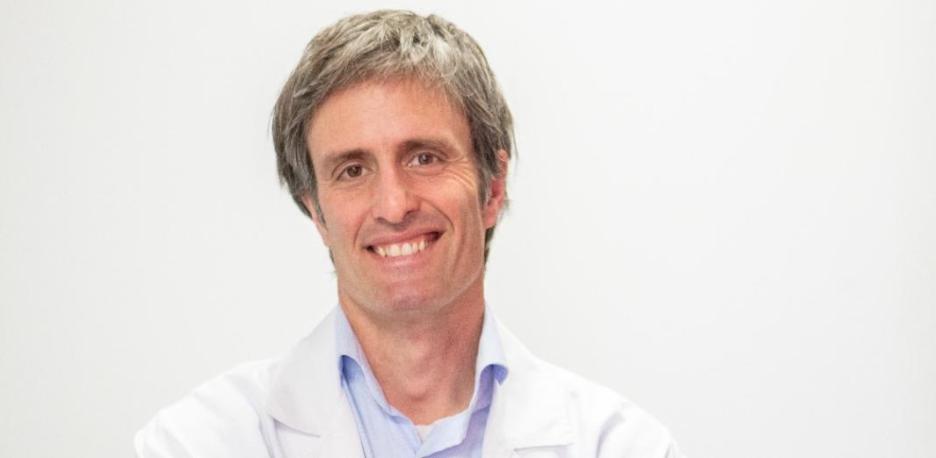
Augusto Covaro, spine surgery specialist: “The great revolution is to eliminate pain with the least possible invasiveness”
Dr. Augusto Covaro advocates regenerative therapies, endoscopic spine surgery and third-generation disc prostheses to preserve patients’ mobility.

Spine surgery has undergone profound changes in recent years. What once involved more aggressive procedures, lengthy recoveries and greater limitations for patients is now moving towards a different scenario: more precise, less invasive treatments designed not only to eliminate pain, but also to preserve function and quality of life.
For more than fifteen years, Dr. Augusto Covaro, a specialist in spine surgery, has been working along this path, focusing his career on incorporating cutting-edge techniques into the treatment of spinal disorders.
“The goal is to restore a patient’s function and eliminate any type of pain”
The great revolution has always been to seek the least aggressive approach possible in spine surgery. The goal is to restore a patient’s function and eliminate any type of pain or disability with the minimum possible surgical aggression,” explains Dr. Augusto Covaro.
This philosophy reflects an approach to medicine based on technology, scientific evidence and continuous training. For Covaro, the goal is not simply to perform better surgery, but to offer solutions that reduce the impact of the procedure and accelerate recovery.

His work is currently structured around three main areas.
The first is endoscopic spine surgery. This technique allows many spinal conditions to be treated using a small camera and cannulas measuring less than one centimetre. Covaro recalls that, in the early days, the available equipment was more limited, whereas today high-definition cameras and increasingly thinner devices are used, with cannulas as small as 6.9 millimetres.
The direct benefit for the patient is a much less invasive procedure, with a minimal skin incision and, in many cases, discharge on the same day.
“We operate on the spine using a small camera and can treat the vast majority of conditions with minimal tissue damage,” he says.
“Today we have therapies that did not exist 10, 15 or 20 years ago”
The second area is motion-preserving surgery, also known as non-fusion surgery.
Unlike traditional spinal fusion techniques, which fix the spine in place, this approach uses third-generation disc prostheses. The difference is significant: movement is not blocked. Instead, the damaged disc is replaced with a mobile prosthesis designed to restore function and relieve pain.
We do not fuse the spine. We place a mobile prosthesis that restores mobility and allows patients to return to sports or physical exercise without limitations,” explains the specialist.
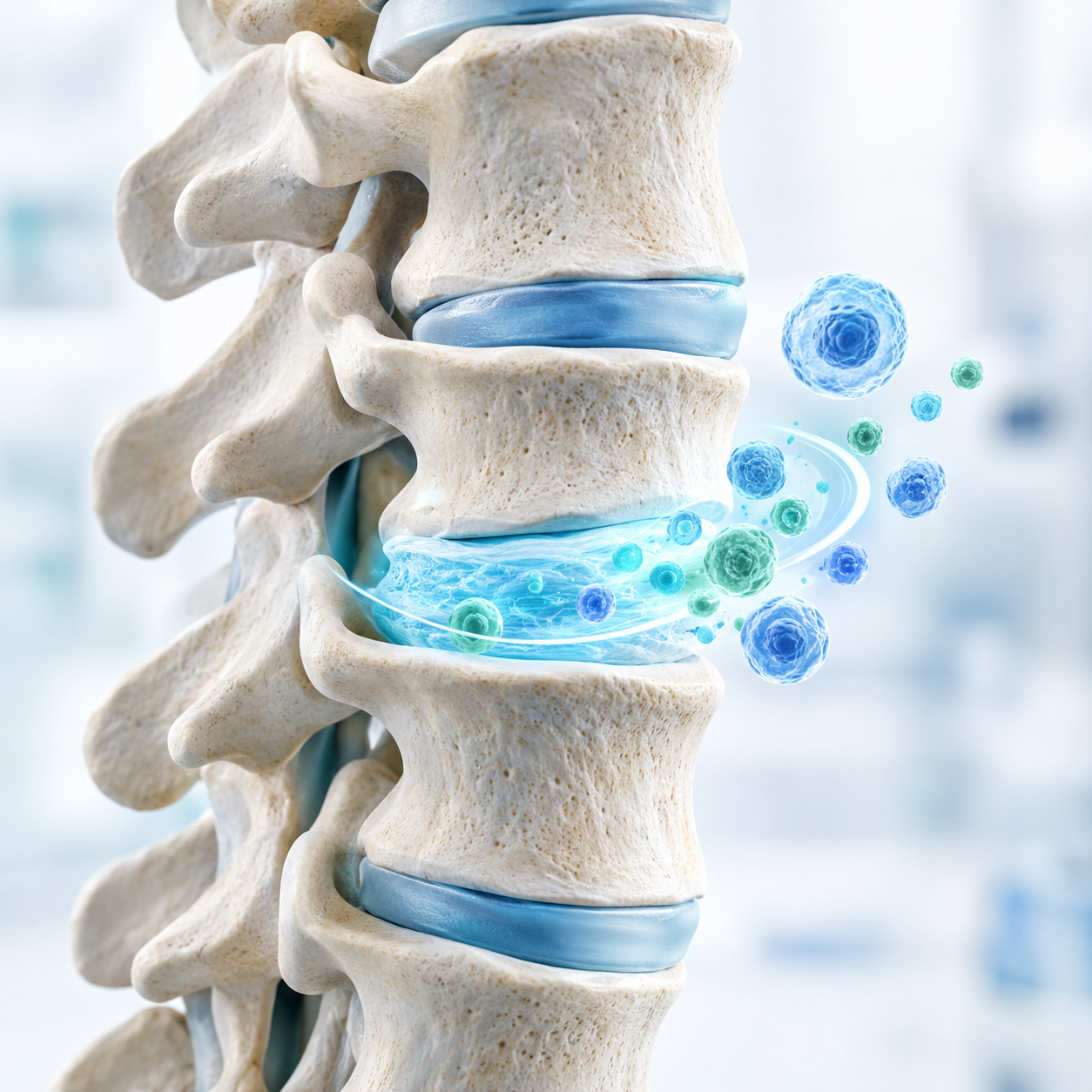
The third area is regenerative and cellular therapies, a field that includes treatments ranging from platelet-rich plasma (PRP) to mesenchymal stem cells and exosomes.
These treatments aim to stimulate the body's natural repair processes and, according to Covaro, are part of a scientific evolution that would have been unimaginable just two decades ago.

This level of specialisation does not happen overnight. Dr. Augusto Covaro stresses that mastering these techniques first requires an in-depth knowledge of traditional surgery, anatomy, pathology and the entire academic and professional training involved in medicine. Only then comes super-specialisation. “It is a very long journey. I have devoted my entire professional life to this, and it is now that I can say that we train other professionals and that we are in contact with the world’s leading specialists in our field,” he explains.
His work as a trainer allows him to share his experience with surgeons who are beginning to incorporate these techniques or who are seeking to refine them.
Technological innovation in spine surgery
Technological innovation has also been a decisive factor. 4K high-definition cameras, smaller-calibre instruments and modern disc prostheses have transformed surgical practice.
Dr. Augusto Covaro has experienced this evolution first-hand: he began working with much older equipment and now uses state-of-the-art devices.
This evolution, he explains, depends both on advances in medical knowledge and on technological progress within the medical industry, which has enabled spine surgery to reach a much higher level of precision.
Looking to the future, Dr. Augusto Covaro does not speak of a fixed goal, but rather of an ongoing process.
His aim is to continue learning from patients, other specialists and the international groups with whom he shares cases, opinions and new techniques.
“The goals are endless. We must always continue growing, travelling, learning and looking for new ways to make treatments faster, more effective and less aggressive,” he concludes.
This constant pursuit defines an approach to spine surgery that sees the spine not simply as a structure to be repaired, but as an essential part of an active patient’s life.